

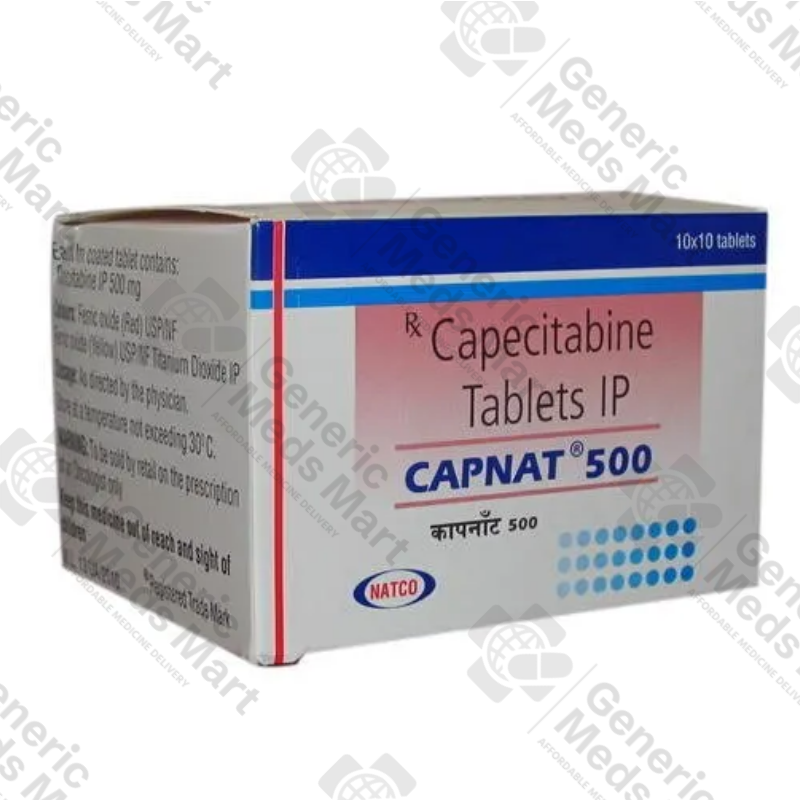
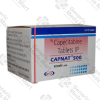
Capnat 500 mg Capecitabine (1 pack / 100 tablets)
$134.00
100 tablets in pack → $ 1.34 / tablet
Capnat 500 mg contains capecitabine, an oral fluoropyrimidine chemotherapy used in colorectal and breast cancer regimens under oncology supervision. Generic Meds Mart supplies Capnat 500 mg (1 pack / 100 tablets) in original packaging with affordable pricing, secure checkout and discreet delivery where regulations allow.
Buy Capnat 500 mg capecitabine tablets online
Capnat 500 mg Capecitabine Tablets (1 pack / 100 tablets)
At a Glance
Generic Name: Capecitabine
Brand Name: Capnat
Strength & Pack Size: 500 mg capecitabine per tablet; 1 pack / 100 tablets
Dosage Form & Route: Oral tablets, swallowed whole with water
Therapeutic Class: Fluoropyrimidine antimetabolite (prodrug of 5-fluorouracil), oral chemotherapy
Primary Indication: Colorectal cancer and breast cancer where capecitabine-based therapy is appropriate
Usual Adult Dose: Dosing is individualized; capecitabine is commonly taken twice daily in cycles, but your oncologist defines the exact regimen
Prescription Status: Prescription-only medicine
Storage: Store below 25–30 °C in a dry place, protect from moisture, keep out of reach of children
Product Description
Capnat 500 mg contains capecitabine, an oral chemotherapy medicine used in adults with colorectal cancer and breast cancer when an oncologist determines that a fluoropyrimidine-based regimen is appropriate. This presentation provides 500 mg tablets in a 1 pack / 100 tablets format to support planned treatment cycles and monitoring. Capecitabine therapy must be guided by a confirmed diagnosis and a specialist-led plan, and it should never be started, stopped, or adjusted without medical supervision.
Capecitabine is commonly used because it allows “oral chemotherapy” dosing at home while still requiring careful clinical oversight. Your oncology team considers the goal of treatment, prior therapies, kidney and liver function, infection risk, and potential interactions before selecting capecitabine. If you plan to buy Capnat 500 mg online, your clinic should confirm the intended dose, cycle structure, and the correct pack size so you can order the right quantity for your schedule rather than relying only on capecitabine price comparisons.
Generic Meds Mart supplies Capnat 500 mg capecitabine tablets in original manufacturer packaging sourced through licensed distribution channels. Packs are typically labelled with the brand name, strength, active ingredient, batch number, and expiry date so your pharmacist or clinic can verify the product at receipt. Orders are processed with secure checkout and shipped in discreet outer packaging, and international delivery may be available where regulations allow.
Key Uses
Capnat 500 mg is used in colorectal cancer regimens where capecitabine is selected as part of adjuvant therapy after surgery or for advanced disease, depending on local guidance and specialist judgement. It may be prescribed alone or combined with other anticancer medicines, with the exact combination and duration determined by your treating oncologist.
Capnat 500 mg is also used in breast cancer in selected settings where capecitabine-based treatment is recommended by the oncology team. The role of capecitabine can vary based on tumour subtype, previous treatments, and treatment goals, so your specialist will explain whether it is being used for disease control, symptom management, or to reduce the risk of recurrence in situations where it is clinically appropriate.
How Capecitabine Works in Chemotherapy
Capecitabine is designed as a prodrug, meaning it is converted inside the body into an active anticancer compound related to 5-fluorouracil (5-FU). After absorption, capecitabine undergoes several enzymatic steps, and a key part of this activation occurs more strongly in tumour tissues than in many normal tissues. The active form interferes with how rapidly dividing cells create DNA and RNA, which slows cancer cell growth and can lead to cell death over time when used as part of a planned regimen.
Because capecitabine affects cell division, it can also impact some healthy rapidly dividing cells, which explains common side effects involving the gastrointestinal tract, skin, and blood counts. This is why oncology supervision and monitoring are essential even though the medicine is taken by mouth. Your oncologist balances expected benefit with safety and may adjust dosing based on symptoms, laboratory tests, and any interacting medicines.
Dosage & Administration
Capnat 500 mg is taken by mouth exactly as prescribed by your oncologist. Capecitabine regimens are individualized and commonly involve twice-daily dosing in treatment cycles, but the exact schedule, dose per administration, and duration depend on your diagnosis, body size, kidney function, and combination regimen. Tablets are usually swallowed whole with water, and many protocols instruct patients to take doses within a short time after food to support tolerability, but you should follow the instructions provided by your clinic.
Never self-adjust capecitabine dosage, never split or crush tablets unless your oncology team gives a specific alternative plan, and do not take extra tablets to “make up” for missed doses without explicit medical guidance. If vomiting occurs after a dose or a dose is missed, your clinic will advise what to do based on your regimen and timing. Always keep an up-to-date list of all prescription medicines, over-the-counter products, and supplements to review with your oncologist and pharmacist.
Precautions
Capecitabine can cause serious toxicity in certain patients, including those with reduced activity of enzymes involved in fluoropyrimidine metabolism. Your oncologist may consider testing or careful early monitoring depending on local practice and your history. Kidney function is especially important for dosing decisions, and dose adjustments may be needed in renal impairment. Inform your specialist about any history of heart disease, prior fluoropyrimidine reactions, severe diarrhoea, or dehydration, because these factors can influence safety planning.
Drug interactions matter. Anticoagulants and some other medicines may require extra monitoring when taken with capecitabine, and your oncology team should review all medicines before you start Capnat 500 mg. Pregnancy should be avoided during chemotherapy, and effective contraception should be discussed with your specialist. Contact your clinic urgently if you develop fever, severe diarrhoea, uncontrolled vomiting, painful mouth sores, chest pain, confusion, or signs of dehydration, because these may require prompt assessment and supportive care.
Capecitabine Side Effects
Common side effects
Common capecitabine side effects can include diarrhoea, nausea, vomiting, loss of appetite, abdominal discomfort, fatigue, and mild changes in blood counts. Many patients also experience hand–foot syndrome (redness, swelling, pain, or peeling of the palms and soles), as well as skin dryness or mild rash. These effects often improve with supportive care and timely dose adjustments directed by the oncology team, but they should be reported early rather than managed by changing doses independently.
Serious side effects
Serious side effects require urgent medical attention and may include severe or persistent diarrhoea, dehydration, inability to keep fluids down, significant bleeding or bruising, severe mouth sores, high fever or signs of infection, marked weakness, severe skin reactions with blistering or peeling, chest pain, shortness of breath, or sudden dizziness or fainting. Severe reductions in blood counts and serious heart-related events are uncommon but possible, and any alarming symptoms should be treated as urgent while you inform clinicians that you are taking capecitabine.
Storage
Store Capnat 500 mg tablets below 25–30 °C in a dry place, protected from moisture and direct heat. Keep tablets in their original packaging until use to reduce mix-ups and protect from humidity. Keep all chemotherapy medicines out of reach of children and pets. Do not use tablets after the expiry date on the carton or strips, and follow local guidance or your pharmacist’s instructions for safe disposal of unused or expired medicines.
Why Buy from Generic Meds Mart
Generic Meds Mart focuses on access and logistics for essential oncology medicines such as Capnat 500 mg capecitabine tablets. We supply products in original packaging sourced through licensed channels, with batch and expiry details available for verification by pharmacies and clinics. Pricing is shown in USD for transparency, and orders are processed via secure checkout.
Shipments are packed in discreet outer cartons to support privacy, and trackable or international delivery options may be available where regulations allow. Generic Meds Mart does not replace your treating doctor—your oncologist remains responsible for deciding whether capecitabine is appropriate, how it should be dosed, and how side effects should be managed.
Order Now
Before you order capecitabine online, you should have a confirmed diagnosis and a treatment plan agreed with your oncology team, including the intended cycle schedule and monitoring plan. Your clinic can help estimate how many tablets are needed for the planned cycles so you can choose the correct quantity and avoid interruptions. Once confirmed, you can select Capnat 500 mg (1 pack / 100 tablets), add it to your cart, and complete secure checkout in USD with discreet delivery where allowed.
Do not start therapy on your own or change dosing without medical guidance. If you develop symptoms that may indicate serious capecitabine side effects—especially severe diarrhoea, fever, dehydration, chest pain, or severe skin reactions—seek urgent medical care and tell clinicians you are taking capecitabine.
FAQ about Capnat (Capecitabine)
Q1: What is Capnat 500 mg used for?
Capnat 500 mg contains capecitabine, an oral chemotherapy medicine used in colorectal cancer and breast cancer when a capecitabine-based regimen is appropriate and prescribed by an oncologist.
Q2: Is Capnat taken at home or given as an infusion?
Capnat is taken by mouth as tablets, which allows treatment at home, but it still requires close oncology supervision, clear dosing instructions, and regular monitoring.
Q3: How often is capecitabine usually taken?
Many regimens use twice-daily dosing in cycles, but the exact schedule and dose depend on your diagnosis, other medicines in the regimen, and your kidney function. Only your oncologist can define the correct plan.
Q4: What should I do if I miss a dose?
Do not take extra tablets unless your clinic specifically instructs you to. Contact your oncology team for guidance based on the timing of the missed dose and your current cycle.
Q5: What side effects should I report urgently?
Report severe diarrhoea, fever, inability to keep fluids down, severe mouth sores, unusual bleeding, chest pain, shortness of breath, or severe skin reactions urgently, and tell clinicians you are taking capecitabine.
Be the first to review “Capnat 500 mg Capecitabine (1 pack / 100 tablets)”
You must be logged in to post a review.
Related products

Reviews
There are no reviews yet.