

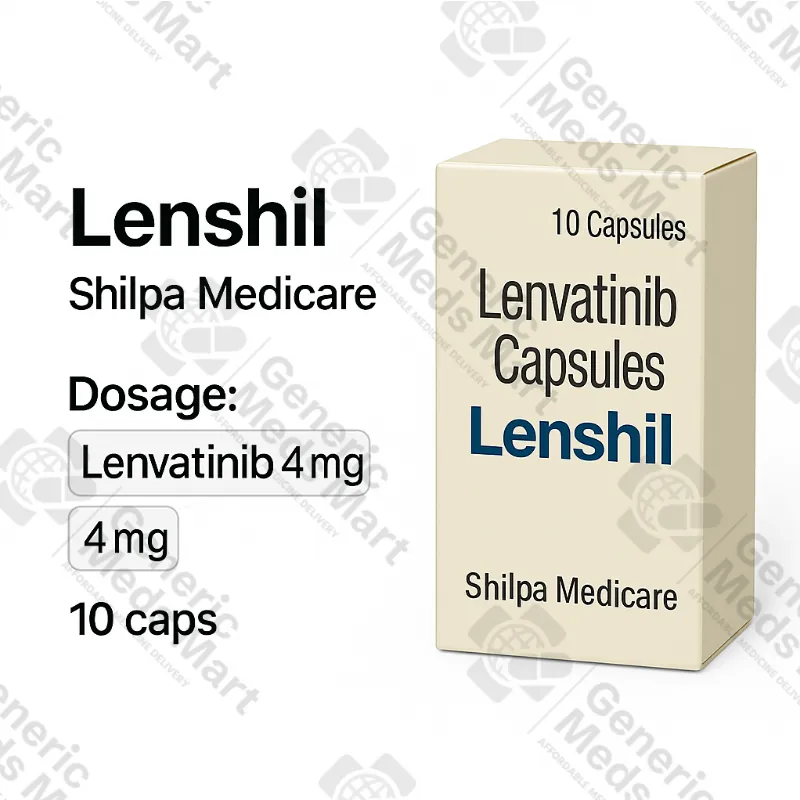
Lenshil 4 mg, 10 mg Lenvatinib Capsules
Price range: $126.00 through $260.00
Lenshil is an oral anticancer medicine containing lenvatinib, a receptor tyrosine kinase inhibitor used in progressive or advanced differentiated thyroid cancer and selected liver, kidney and endometrial cancers. Lenshil 4 mg and 10 mg capsules (1 pack / 10 caps each) are combined to match the total daily lenvatinib dose prescribed by your oncology team, and Generic Meds Mart supplies them in original cartons from licensed distributors with discreet, trackable international shipping where regulations allow.
Buy Lenshil 4 mg and 10 mg Lenvatinib Capsules Online
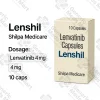
Lenshil 4 mg and 10 mg Lenvatinib Capsules (1 pack / 10 caps)
At a Glance
Generic Name: Lenvatinib
Brand Name: Lenshil
Strength & Pack Size: 4 mg and 10 mg capsules; 1 pack / 10 capsules each
Dosage Form & Route: Oral capsules taken once daily by mouth
Therapeutic Class: Oral receptor tyrosine kinase inhibitor (targeted anticancer therapy)
Primary Indications: Differentiated thyroid cancer, hepatocellular carcinoma, renal cell carcinoma and selected endometrial cancers
Usual Daily Dose: Combination of 4 mg and 10 mg capsules to reach the total daily lenvatinib dose defined by protocol and body weight
Prescription Status: Prescription-only oncology medicine for specialist use
Storage: Store below 25–30 °C, protect from moisture and light, keep out of reach of children
Product Description
Lenshil is a branded lenvatinib capsule used as an oral targeted therapy in several advanced or progressive cancers. Each capsule contains lenvatinib, a receptor tyrosine kinase inhibitor that interferes with signalling pathways driving tumour growth and the formation of new blood vessels feeding tumours. Lenshil 4 mg and Lenshil 10 mg capsules are designed to be combined in different ways to match the total daily lenvatinib dose specified in oncology protocols, taking into account body weight, indication and tolerability.
Lenvatinib is most widely recognised for its role in progressive or advanced differentiated thyroid cancer that is refractory to radioactive iodine treatment. It is also used in unresectable hepatocellular carcinoma (liver cancer), in selected renal cell carcinoma regimens and, in combination with immunotherapy, in certain advanced endometrial cancers when other options are not suitable or have failed. Lenshil lenvatinib capsules provide a convenient oral formulation that can be taken at home once daily, while all dosing decisions, monitoring and adjustments remain under the supervision of an oncology specialist.
Generic Meds Mart supplies Lenshil lenvatinib 4 mg and 10 mg capsules in original manufacturer packaging sourced from licensed distributors. Each pack of 10 capsules carries clear labelling of the strength, generic name, batch number, expiry date and storage conditions so that clinics and pharmacies can verify the medicine against the prescribed regimen. Orders are shipped in plain outer packaging that does not reveal the nature of the treatment, helping to protect patient privacy while supporting continuity of care in regions where accessing lenvatinib locally may be challenging.
Key Uses
Lenshil 4 mg and 10 mg capsules are used in adults for the treatment of several cancers where lenvatinib has a recognised role in international or local guidelines. These include progressive, locally recurrent or metastatic differentiated thyroid cancer that no longer responds adequately to radioactive iodine therapy, unresectable hepatocellular carcinoma in certain treatment settings, advanced renal cell carcinoma when given with other agents and selected advanced endometrial cancers in combination with immunotherapy.
The decision to start lenvatinib and to use Lenshil specifically depends on tumour type, staging, prior treatments, overall health, comorbidities and laboratory results. Lenvatinib is a powerful targeted therapy and is not appropriate for every patient with these cancers. Your oncology team will review imaging, histology, biomarker status and other systemic options before confirming that a lenvatinib-based regimen is suitable. Lenshil capsules should never be started, stopped or substituted without direct instruction from your treating oncologist.
How Lenvatinib Works in Chemotherapy
Lenvatinib, the active ingredient in Lenshil capsules, is a multi-targeted receptor tyrosine kinase inhibitor. It blocks the activity of several vascular endothelial growth factor (VEGF) receptors and other tyrosine kinases involved in tumour angiogenesis and cell proliferation. By inhibiting these receptors, lenvatinib disrupts the signalling pathways that drive new blood vessel formation and support tumour growth and survival.
This dual effect – restricting the tumour’s blood supply and interfering with signals that promote cancer cell division – can lead to shrinking of tumours or stabilisation of disease in responsive patients. In differentiated thyroid cancer, hepatocellular carcinoma, renal cell carcinoma and endometrial cancer, lenvatinib is often part of a broader treatment strategy that may include prior surgery, radioactive iodine, other systemic therapies and, in some cases, combination immunotherapy. Although it is sometimes described as “chemotherapy”, lenvatinib is technically a targeted agent rather than a traditional cytotoxic drug, but it is still associated with significant side effects that require careful monitoring and dose adjustment.
Dosage & Administration
Lenshil lenvatinib capsules are taken once daily by mouth, with or without food, at approximately the same time each day. The total daily lenvatinib dose is calculated by the treating oncologist according to the type of cancer, body weight, liver function, kidney function, combination partners and local prescribing information. Different combinations of Lenshil 4 mg and Lenshil 10 mg capsules are used to reach that total daily dose; for example, a regimen might use a 10 mg capsule plus one or more 4 mg capsules each day, or several 4 mg capsules in patients requiring lower doses.
Capsules should be swallowed whole with water and should not be crushed, chewed or opened unless a specialist gives explicit alternative instructions. If a dose is missed, your oncology team will advise whether to take it later the same day or to skip it and continue with the next scheduled dose, but doses should never be doubled to “catch up”. Throughout treatment, blood pressure, kidney function, liver function, protein in the urine and other parameters are checked regularly, and the lenvatinib dose may be interrupted, reduced or, in some cases, stopped altogether in response to side effects or disease progression.
Precautions
Before starting Lenshil, your oncology team will review your medical history carefully, including any cardiovascular disease, history of blood clots or strokes, uncontrolled hypertension, bleeding disorders, liver or kidney impairment, thyroid function, electrolyte abnormalities and prior treatments. Lenvatinib can increase blood pressure, affect heart and blood vessel health, impact kidney function and cause proteinuria, so blood pressure and laboratory tests need to be monitored closely. Pre-existing uncontrolled hypertension should be treated before lenvatinib is started, and antihypertensive therapy may be adjusted while you are on Lenshil.
Lenvatinib can interfere with wound healing and may increase the risk of bleeding or fistula formation in certain locations, so planned surgery or recent major operations should be discussed in detail with your oncology and surgical teams. Because lenvatinib can harm a developing baby, effective contraception is recommended for both women and men of reproductive potential during treatment and for a period after the last dose, as defined in local guidance. Breastfeeding is generally not recommended during lenvatinib therapy. You should inform your doctor about all prescription medicines, over-the-counter drugs and herbal supplements you are taking, as some may interact with lenvatinib or its side effects.
Lenvatinib Side Effects
Common side effects
Common side effects of lenvatinib include high blood pressure, diarrhoea, decreased appetite, weight loss, nausea, vomiting, fatigue, weakness, abdominal pain, mouth sores, headache, hoarse voice and changes in taste. Swelling of the legs, protein in the urine and mild changes in kidney or liver blood tests are also frequently reported. Many patients experience some combination of these effects, especially in the first weeks and months of treatment, and dose adjustments or supportive medicines are often used to help manage them.
In many cases, common side effects can be reduced by careful blood pressure control, dietary adjustments, anti-diarrhoeal or anti-nausea medicines, mouth care for oral soreness and regular monitoring. Your oncology team will give you detailed instructions on what to report immediately and what can be discussed at the next scheduled visit. It is important not to ignore persistent symptoms, even if they seem manageable, because early dose modifications can prevent more serious complications.
Serious side effects
Serious side effects of lenvatinib are less common but require urgent medical attention and sometimes permanent discontinuation of therapy. These include very high blood pressure or hypertensive crisis, symptoms of stroke such as sudden weakness on one side of the body, confusion, difficulty speaking, vision changes or severe headache, signs of heart problems such as chest pain, shortness of breath or irregular heartbeat, severe bleeding, coughing up blood or black, tarry stools and severe abdominal pain that could signal bowel perforation or fistula formation.
Other serious risks include significant kidney injury with sharply reduced urine output, marked proteinuria, severe liver dysfunction with jaundice and coagulopathy and rare but serious brain or neurological events. If you experience any sudden or severe symptom – especially chest pain, difficulty breathing, neurological changes, severe headache, major bleeding or profound weakness – you should seek emergency medical care immediately and contact your oncology team as soon as possible. Do not take extra doses or stop Lenshil abruptly without professional guidance, but do treat these warning signs as urgent.
Storage
Lenshil 4 mg and 10 mg lenvatinib capsules should be stored at room temperature, generally below 25–30 degrees Celsius, in a dry place away from heat and direct sunlight. Keep the capsules in their original blister strip and outer carton until it is time to take a dose, to protect them from moisture and to avoid mix-ups with other medicines. Do not store Lenshil in the bathroom or near sinks where humidity is high. As with all potent anticancer medicines, the pack should be kept out of sight and reach of children and pets. Do not use the capsules after the expiry date printed on the packaging, and follow local guidance or your clinic’s advice on how to dispose of unused or expired medicines safely.
Why Buy from Generic Meds Mart
Generic Meds Mart focuses on reliable access to targeted oncology medicines such as Lenshil lenvatinib capsules for patients and clinics in markets where supply or pricing can be difficult. We work only with licensed manufacturers and authorised distributors that follow Good Manufacturing Practice standards and maintain traceable batch and expiry records. Lenshil 4 mg and Lenshil 10 mg are provided in original, sealed cartons so that oncology pharmacists and treating clinicians can verify the brand, strength and batch details against their protocols before dispensing.
Orders are processed in USD through secure checkout, and shipments are prepared in neutral external packaging with no visible references to cancer, lenvatinib, thyroid disease or other diagnoses. Where available, tracked delivery options help align medication arrival with scheduled oncology visits and imaging, reducing the chance of unplanned breaks in therapy due to supply issues. While Generic Meds Mart supports access and logistics, all choices regarding whether lenvatinib is appropriate, what daily dose should be used and how long treatment should continue rest solely with qualified oncology professionals.
Order Now
Before ordering Lenshil 4 mg or 10 mg capsules from Generic Meds Mart, you should have a clearly documented treatment plan from your oncology team that specifically includes lenvatinib, along with the target daily dose, expected duration and monitoring schedule. Your specialists will base this plan on tumour type, prior treatments, imaging, laboratory results and your overall health status. Once the regimen is confirmed, you or your clinic can calculate how many Lenshil packs are required for each treatment period and select the appropriate combination of 4 mg and 10 mg strengths.
You should not attempt to self-prescribe lenvatinib, change your Lenshil dose on your own or substitute one strength for another without direct instruction from your oncologist. If you experience new or worsening symptoms while taking Lenshil, including severe hypertension, neurological changes, bleeding, chest pain, breathing difficulties or marked swelling, contact your treating team immediately rather than simply stopping the capsules. Generic Meds Mart’s role is to help ensure that the prescribed Lenshil strengths are available in a timely, discreet and verifiable way; the complex clinical management of your cancer always remains in the hands of your oncology team.
FAQ about Lenshil (Lenvatinib)
Q1: What cancers is Lenshil used to treat?
Lenshil contains lenvatinib, a tyrosine kinase inhibitor used in progressive or advanced differentiated thyroid cancer that no longer responds to radioactive iodine, as well as in selected cases of unresectable hepatocellular carcinoma, advanced renal cell carcinoma and certain advanced endometrial cancers. The exact indication and regimen are defined by your oncology team based on current guidelines and your clinical situation.
Q2: How should I take Lenshil capsules each day?
Lenshil is usually taken once daily at about the same time each day, with or without food. Your oncologist will prescribe a total daily lenvatinib dose and indicate how many 4 mg and 10 mg capsules you should take to reach that dose. Swallow the capsules whole with water and do not crush, chew or open them unless your specialist gives specific alternative instructions.
Q3: What happens if I miss a dose of Lenshil?
If you miss a dose of Lenshil and remember relatively soon, your oncology team may advise you to take it the same day and then return to your usual schedule. If it is close to the time of your next dose, they may recommend skipping the missed dose. You should not double doses to make up for a missed one. For personalised advice, follow the instructions given by your clinic and discuss any adherence issues at your next visit.
Q4: Can I drink alcohol while taking Lenshil?
Light or occasional alcohol may be permitted for some patients, but both alcohol and lenvatinib can affect blood pressure, liver function and overall tolerance of therapy. Because of this, you should discuss alcohol use directly with your oncologist, who can advise whether it is safe for you and, if so, in what amounts. Avoid drinking alcohol if you already have significant liver problems or if your doctor has advised against it.
Q5: How long will I need to stay on Lenshil treatment?
Treatment duration with Lenshil varies from person to person. Some patients continue lenvatinib therapy as long as the disease remains controlled and side effects are manageable, while others may stop or switch therapies due to intolerance or progression. Your oncology team will monitor your response with scans, blood tests and clinical assessments and will decide whether to continue, adjust or discontinue lenvatinib based on these results and your overall health.
Be the first to review “Lenshil 4 mg, 10 mg Lenvatinib Capsules”
You must be logged in to post a review.
Related products
Sale!

Original price was: $39.00.$36.00Current price is: $36.00.

Sale!
Original price was: $175.00.$165.00Current price is: $165.00.
Reviews
There are no reviews yet.