

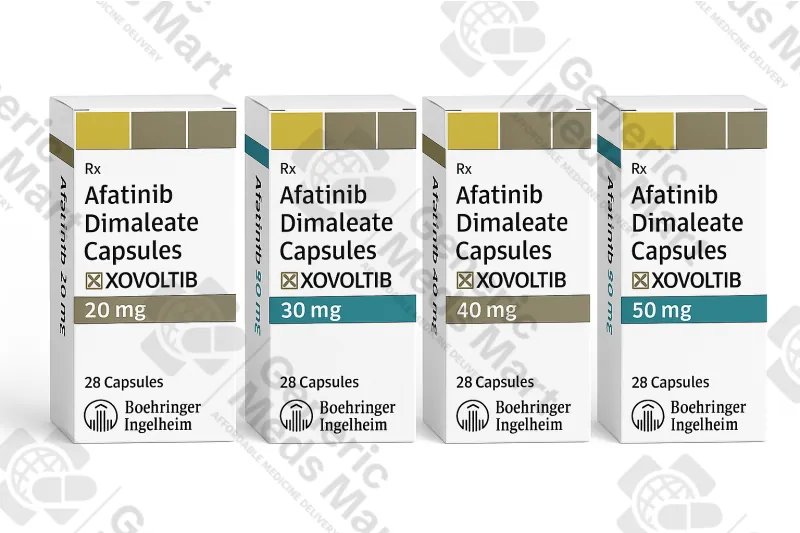
Xovoltib Afatinib – 20 mg, 30 mg, 40 mg, 50 mg Capsules
Price range: $1,899.00 through $2,292.00
Xovoltib afatinib 20 mg, 30 mg, 40 mg and 50 mg capsules (1 pack / 28 caps) are oral EGFR / ErbB tyrosine kinase inhibitor therapy used under specialist oncology supervision for advanced or metastatic EGFR mutation–positive non-small cell lung cancer. Generic Meds Mart supplies Xovoltib in original manufacturer packaging from licensed distributors with discreet, trackable international delivery where regulations allow.
Buy Xovoltib Afatinib Capsules Online – 20 mg, 30 mg, 40 mg, 50 mg for EGFR Mutation-Positive NSCLC
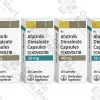
Xovoltib Afatinib Capsules (20 mg, 30 mg, 40 mg, 50 mg) (1 pack / 28 caps)
At a Glance
Generic Name: Afatinib (afatinib dimaleate)
Brand Name: Xovoltib
Strength & Pack Size: 20 mg, 30 mg, 40 mg, 50 mg per capsule; 1 pack / 28 capsules
Dosage Form & Route: Oral capsule, swallowed whole with water
Therapeutic Class: EGFR tyrosine kinase inhibitor (targeted anticancer therapy)
Primary Indication: EGFR mutation-positive non-small cell lung cancer (NSCLC) where afatinib is prescribed by an oncologist
Usual Adult Dose: Defined by an oncology specialist based on mutation status, prior therapy, and tolerability
Prescription Status: Prescription-only medicine
Storage: Store in original packaging as directed on the label; protect from moisture and keep out of reach of children
Product Description
Xovoltib contains afatinib, an oral targeted therapy used in adults with non-small cell lung cancer when EGFR mutation testing supports an EGFR-targeted approach and an oncology specialist determines that afatinib is appropriate. Xovoltib afatinib capsules are supplied as 1 pack / 28 caps and offered in multiple strengths (20 mg, 30 mg, 40 mg, 50 mg) to support individualized dosing within specialist-led care. Because this is prescription-only cancer therapy, treatment selection, monitoring, and any dose changes must be guided by a qualified oncologist.
Afatinib is commonly discussed in the context of EGFR inhibitor therapy for EGFR mutation-positive NSCLC. Your specialist considers the EGFR variant, prior treatments, organ function, comorbidities, and drug interactions before choosing therapy. Patients and caregivers following a prescription-led oncology plan may search for this treatment as Xovoltib afatinib capsules online when coordinating refills and maintaining continuity of care.
Generic Meds Mart supplies Xovoltib afatinib capsules in original packaging sourced through licensed channels. The carton typically includes clear labeling for strength, product name, active ingredient, batch number, and expiry date for verification by clinics and pharmacies. Orders are shipped in discreet outer packaging to support privacy, and global delivery options help patients coordinate access alongside required monitoring. If you are comparing afatinib price or evaluating EGFR inhibitor options, confirm the correct strength and pack size with your care team before ordering.
Key Uses
Xovoltib afatinib is used as EGFR-targeted therapy for non-small cell lung cancer in adults with confirmed EGFR mutation-positive disease, typically within a complete oncology care plan. Afatinib is a targeted tyrosine kinase inhibitor rather than a classic cytotoxic chemotherapy, and it requires monitoring for side effects, tolerability, and treatment response. The role of afatinib in NSCLC management depends on tumor characteristics, prior therapy exposure, and specialist judgment.
Common Searches and Treatment Contexts for Afatinib
- EGFR Inhibitor for NSCLC: Afatinib is used as a targeted EGFR tyrosine kinase inhibitor for EGFR mutation-positive non-small cell lung cancer under oncologist supervision.
- Afatinib Targeted Therapy: This medicine is used in treatment strategies where EGFR pathway blockade is expected to reduce growth signaling in defined NSCLC tumors.
- Afatinib 20 mg, 30 mg, 40 mg, 50 mg Capsules: Multiple strengths support individualized regimens and dose adjustment for tolerability when clinically needed.
- Buy Afatinib Online: Patients with a confirmed prescription and monitoring plan may seek reliable access to original-packaging afatinib to maintain therapy continuity.
- EGFR Mutation-Positive Lung Cancer Treatment: Afatinib is used when EGFR mutation testing indicates an EGFR-targeted approach is appropriate in NSCLC care.
How Afatinib Works in Chemotherapy
Afatinib works by irreversibly inhibiting the EGFR family of tyrosine kinases, which can drive tumor growth in certain NSCLC tumors with EGFR mutations. By blocking EGFR signaling, afatinib reduces downstream pathways that cancer cells may rely on for survival and proliferation. This targeted approach differs from traditional cytotoxic chemotherapy because it focuses on a specific molecular driver rather than broadly damaging dividing cells.
Because afatinib affects EGFR signaling in normal tissues as well as tumor cells, side effects often involve the skin and gastrointestinal tract. Your oncology team balances expected benefit with tolerability, and dose adjustment may be considered to manage symptoms while maintaining the treatment plan. Monitoring remains essential, and treatment decisions should follow specialist guidance.
Dosage & Administration
Xovoltib afatinib capsules must be taken exactly as prescribed by an oncologist. The selected strength (20 mg, 30 mg, 40 mg, or 50 mg) and schedule are individualized based on your clinical status, prior therapy, and tolerability. This is why afatinib dosage should never be changed without specialist instruction. Capsules should be swallowed whole with water and taken consistently according to the plan set by your clinic.
If you miss a dose, follow your prescribing team’s instructions rather than taking extra capsules to compensate. Drug interactions can be important, so share a complete list of medicines and supplements with your oncologist and pharmacist. Your team may also advise supportive care measures early, especially for diarrhea or skin reactions, to reduce the risk of complications and avoid unnecessary interruptions.
Precautions
Afatinib can cause significant diarrhea, which may become severe and lead to dehydration if not managed promptly. Skin reactions such as rash, dryness, and nail changes are common with EGFR inhibitors, and early management is often part of the care plan. Liver function changes can occur, so periodic blood tests may be required.
Rare but serious events can include interstitial lung disease-like reactions, severe skin reactions, ocular problems, or other clinically significant complications in susceptible patients. Pregnancy should be avoided during treatment, and contraception planning should be discussed with a qualified clinician. Report new or worsening shortness of breath, severe rash, eye pain, or persistent vomiting/diarrhea promptly.
Afatinib Side Effects
Common side effects
Common afatinib side effects include diarrhea, skin rash, dry skin, mouth sores, reduced appetite, nausea, fatigue, and nail changes. These effects can often be managed with supportive care and specialist-led dose adjustment. Do not self-adjust therapy; discuss symptoms early with your oncology team.
Serious side effects
Serious side effects require urgent medical attention and may include severe diarrhea with dehydration, severe skin reactions with blistering or peeling, new or worsening breathing problems that could suggest lung inflammation, significant liver injury signs such as jaundice or dark urine, or severe eye pain and vision changes. If you develop alarming symptoms, seek urgent care and inform clinicians that you are taking afatinib.
Storage
Store Xovoltib afatinib capsules in original packaging as directed on the label, protected from moisture and excessive heat. Keep out of reach of children. Do not use capsules after the expiry date printed on the carton.
Why Buy from Generic Meds Mart
Generic Meds Mart supports access to specialist medicines such as Xovoltib afatinib capsules by supplying products in original packaging sourced through licensed channels. Clear labeling with batch and expiry information helps clinics and pharmacies verify each pack. Pricing is displayed in USD, and secure checkout supports straightforward ordering for planned therapy.
For patients coordinating ongoing EGFR-targeted therapy, discreet packaging and global delivery options can help maintain continuity alongside required monitoring. Generic Meds Mart does not replace your oncology team; all decisions about whether afatinib is suitable, how long to use it, and how to manage side effects must be made by qualified healthcare professionals.
Order Now
Before you buy Xovoltib afatinib capsules online from Generic Meds Mart, you should have confirmed EGFR mutation testing, a diagnosis of NSCLC, and a treatment plan defined by your oncologist. Your clinic will determine the appropriate strength (20 mg, 30 mg, 40 mg, or 50 mg), monitoring schedule, and supportive care plan. Once your plan is confirmed, select Xovoltib (1 pack / 28 caps), add it to your cart, and complete secure checkout in USD.
Do not start or change afatinib therapy without specialist supervision. If you develop severe diarrhea, breathing problems, jaundice, eye pain, or rapidly worsening rash, seek urgent medical care and inform clinicians that you are receiving afatinib.
FAQ about Xovoltib (Afatinib)
Q1: What is Xovoltib used for?
Xovoltib contains afatinib, an EGFR tyrosine kinase inhibitor used for EGFR mutation-positive non-small cell lung cancer when prescribed by an oncologist as part of a specialist-led plan.
Q2: How do I know which strength I need (20 mg, 30 mg, 40 mg, 50 mg)?
The strength is selected by your oncologist based on tolerability, monitoring, and the overall treatment plan. Multiple strengths allow dose adjustment when clinically needed.
Q3: Can I take Xovoltib at home?
Xovoltib is taken orally at home, but it is targeted cancer therapy that requires prescription-led monitoring and side effect management under oncology supervision.
Q4: What should I do if I miss a dose?
Follow your clinic’s instructions and do not take extra capsules to make up for a missed dose unless your oncologist specifically advises it. If unsure, contact your prescribing team.
Q5: What are common afatinib side effects?
Common afatinib side effects include diarrhea, skin rash, dry skin, mouth sores, reduced appetite, nausea, fatigue, and nail changes. Report persistent or severe symptoms early so your oncology team can guide supportive care.
Q6: Is Xovoltib the same as Gilotrif (Generic Gilotrif)?
Xovoltib is Generic Gilotrif – it contains the same active ingredient (afatinib) as Gilotrif. It’s used for the same purpose at the same strength, while differences may be in manufacturer, inactive ingredients (excipients), capsule appearance, and packaging. If you’re switching between products, confirm the substitution with a qualified healthcare professional.
1 review for Xovoltib Afatinib – 20 mg, 30 mg, 40 mg, 50 mg Capsules
Add a review
You must be logged in to post a review.
Related products
Sale!
Anticancer
Original price was: $52.00.$49.00Current price is: $49.00.


Darrel –
I’m so glad i finally find reliable source of my medicine! Thanks