

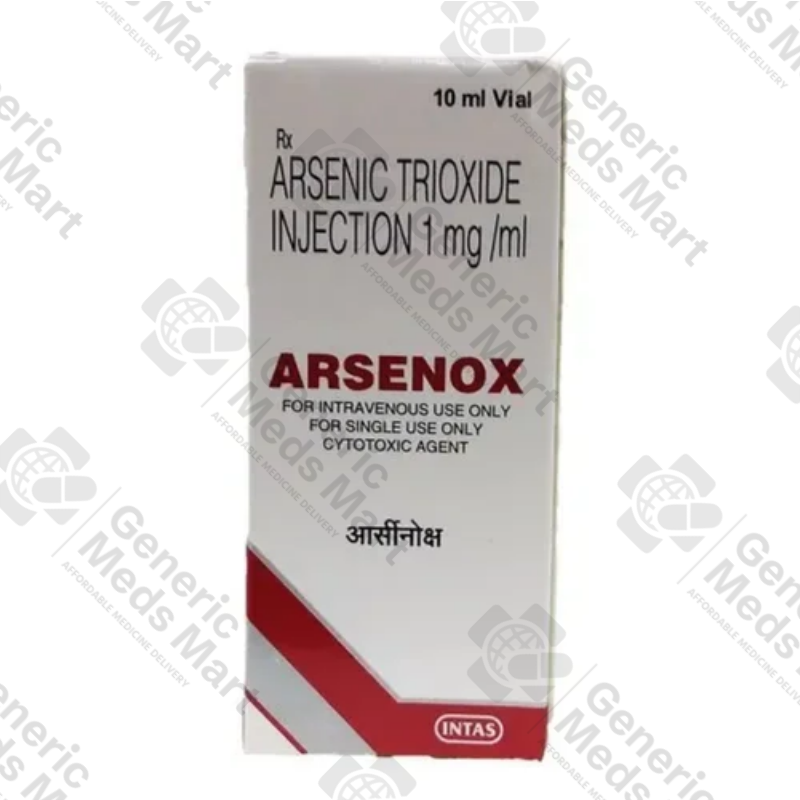
Arsenox 10 mg Injection – Arsenic Trioxide for APL
$30.00
1 vials in pack → $ 30.00 / vial
Arsenox 10 mg arsenic trioxide injection is a hospital-only IV anticancer medicine used in acute promyelocytic leukemia (APL) with PML-RAR-α positivity, given as a diluted infusion under intensive specialist monitoring. Generic Meds Mart supplies Arsenox 10 mg in original manufacturer packaging from licensed distributors with discreet, trackable international shipping where regulations allow.
Buy Arsenox 10 mg Arsenic Trioxide Injection Online
Arsenox 10 mg Arsenic Trioxide Injection
At a Glance
Generic Name: Arsenic Trioxide
Brand Name: Arsenox 10 mg
Strength & Pack Size: 10 mg arsenic trioxide injection, single-use vial (hospital pack)
Dosage Form & Route: Sterile concentrate for solution for IV infusion, after dilution in a hospital or infusion centre
Therapeutic Class: Antineoplastic agent for acute promyelocytic leukemia (APL)
Primary Indications: APL with t(15;17) / PML-RAR-α positivity, newly diagnosed or relapsed, as per local label
Typical Patient Setting: Managed by specialist haematology–oncology teams in hospital or dedicated infusion units
Mode of Action: Induces differentiation and apoptosis of malignant promyelocytes through arsenic-mediated pathways
Key Benefits: Effective option in APL protocols, often combined with all-trans retinoic acid (ATRA) under strict monitoring
Precautions: Requires intensive monitoring of ECG, electrolytes, blood counts and signs of differentiation syndrome
Storage: Store below the temperature stated in the product leaflet, in the original carton, protected from light; do not freeze
Product Description
Arsenox 10 mg contains arsenic trioxide, an intravenous anticancer medicine used in selected patients with acute promyelocytic leukemia (APL) characterized by the PML-RAR-α fusion. Arsenic trioxide injection has become an important component of modern APL therapy, particularly in regimens aimed at inducing remission or treating relapse when standard approaches alone are insufficient. Because of the risk of serious, sometimes life-threatening adverse events, Arsenox 10 mg injection is used exclusively in hospital settings under the direct supervision of experienced haematologists and oncologists.
Each Arsenox 10 mg vial provides a sterile arsenic trioxide concentrate that must be diluted in an appropriate infusion solution before administration. Dosing schedules, combination partners such as all-trans retinoic acid (ATRA) and supportive measures are defined by specialist protocols and local prescribing information. The goal of treatment is to achieve and maintain remission while closely managing complications such as differentiation syndrome, QT interval prolongation, electrolyte disturbances and myelosuppression.
Generic Meds Mart supplies Arsenox 10 mg arsenic trioxide injection in original manufacturer packaging sourced from licensed oncology distributors. Vials are shipped in strict accordance with storage recommendations, and outer parcels are kept neutral so there is no visible reference to leukemia or chemotherapy on the outside. Batch numbers, expiry dates and storage instructions remain fully visible on the vial and carton, allowing hospital pharmacies and clinics to verify the product on receipt. Our role is limited to access and logistics; all treatment decisions and clinical monitoring remain with your specialist team.
Key Uses
Arsenox 10 mg arsenic trioxide injection is used in carefully selected cases of acute promyelocytic leukemia (APL) with confirmed PML-RAR-α positivity, according to local product information and expert guidelines. Typical uses include:
- Induction therapy in newly diagnosed APL alongside or in defined sequences with all-trans retinoic acid (ATRA) in patients considered suitable for arsenic trioxide–based regimens.
- Treatment of relapsed or refractory APL following earlier therapies, again within specialist protocols that specify dosing, combination partners and monitoring requirements.
The exact place of arsenic trioxide injection within the treatment pathway depends on local practice, risk stratification, patient characteristics and evolving data. Arsenox 10 mg is not used for general acute myeloid leukemia (AML) or other malignancies unless explicitly covered by the label and specialist guidelines.
How Arsenic Trioxide Works in Chemotherapy
Arsenic trioxide, the active ingredient in Arsenox 10 mg, exerts complex effects on malignant promyelocytes in APL. At clinically used concentrations, arsenic trioxide promotes differentiation and apoptosis (programmed cell death) of leukemic promyelocytes that carry the PML-RAR-α fusion protein. This fusion disrupts normal retinoic acid signalling and contributes to the differentiation block characteristic of APL.
By acting on the fusion protein and associated pathways, arsenic trioxide helps restore more normal maturation and induces death of abnormal cells, leading to reductions in leukemic burden. Mechanisms include degradation of PML-RAR-α, effects on mitochondrial function, generation of reactive oxygen species and modulation of signalling cascades that control cell survival. When used alongside ATRA in appropriate patients, arsenic trioxide–based regimens have transformed APL from a highly fatal disease into a highly curable subtype of acute leukemia in many settings.
Dosage & Administration
Arsenox 10 mg arsenic trioxide injection must only be prescribed and administered by physicians experienced in the management of acute leukemia and in facilities capable of intensive monitoring and emergency supportive care. The concentrate is never given as a rapid IV push or undiluted. Instead, the contents of the vial are diluted in a compatible infusion solution and administered as an intravenous infusion over a period specified in the prescribing information and local protocol.
Dosing regimens differ between induction, consolidation and relapse treatment schedules and may be weight-based or flat-dose, depending on local guidance. During therapy, patients typically undergo frequent blood counts, ECGs and electrolyte checks, and may require inpatient admission, especially early in treatment or when complications arise. For safety reasons, you must never attempt to self-administer Arsenox 10 mg or handle vials at home; all preparation and administration are carried out by trained healthcare professionals.
Precautions
Before starting arsenic trioxide therapy with Arsenox 10 mg, the specialist team will review your full medical history, baseline ECG, electrolytes (particularly potassium and magnesium), kidney and liver function and concurrent medications. Particular care is taken with medicines that prolong the QT interval or that affect electrolyte levels, as arsenic trioxide can further increase these risks.
Patients are closely monitored for signs of differentiation syndrome (also known as APL differentiation syndrome), including unexplained weight gain, difficulty breathing, pleural or pericardial effusions, hypotension and renal impairment. Prompt recognition and treatment with corticosteroids and supportive care can be life-saving. Prophylactic or empiric measures may be used according to protocol. Women and men of childbearing potential are usually advised to use effective contraception during treatment, and arsenic trioxide is generally avoided during pregnancy unless the potential benefits clearly outweigh the risks in a life-threatening situation.
Arsenic Trioxide Side Effects
Common side effects
Common arsenic trioxide side effects observed during Arsenox 10 mg therapy can include fatigue, nausea, vomiting, diarrhoea, abdominal discomfort, headache, mild rash, pruritus, transient liver enzyme elevations and peripheral oedema. Blood tests may show decreases in white cells, red cells or platelets as part of disease and treatment effects. Changes in ECG parameters, including QT prolongation, and electrolyte disturbances may also be observed and must be managed proactively.
Many of these effects can be controlled with supportive medications, careful fluid and electrolyte management, temporary adjustments in infusion schedules and close multidisciplinary monitoring. Regular communication between the patient, nursing team and physicians is essential so that new symptoms are recognised early.
Serious side effects
Serious arsenic trioxide adverse effects require urgent medical attention and may necessitate treatment interruption, dose adjustment or discontinuation. These include severe differentiation syndrome, marked QT prolongation with risk of arrhythmias such as torsades de pointes, sudden cardiac events, severe electrolyte abnormalities, significant hepatotoxicity, serious infections, tumour lysis syndrome and multi-organ dysfunction in critically ill patients.
Warning signs demanding immediate hospital review include chest pain, palpitations, fainting, severe shortness of breath, rapid weight gain, new or worsening swelling, confusion, seizures, high fever, reduced urine output, severe jaundice, uncontrolled bleeding or any rapid deterioration in overall condition. If any of these occur, emergency medical care should be sought without delay, and healthcare providers must be told that the patient is receiving arsenic trioxide–based therapy.
Storage
Arsenox 10 mg arsenic trioxide vials should be stored at the temperature specified in the product leaflet (typically controlled room temperature or refrigerator conditions), in the original carton, protected from light and never frozen. Vials must be kept out of the reach of children and non-clinical staff. Once prepared for infusion, the diluted solution has defined in-use stability parameters that must be followed strictly by the pharmacy and infusion unit. Disposal of unused solution, vials and infusion materials must comply with local cytotoxic and hazardous waste regulations.
Why Buy from Generic Meds Mart
Generic Meds Mart is focused on supporting access to critical haematology–oncology medicines such as Arsenox 10 mg arsenic trioxide injection, especially where local supply or pricing can be challenging. We work exclusively with licensed manufacturers and authorised distributors that adhere to recognised quality standards and maintain traceable batch records. By supplying Arsenox 10 mg in sealed original packaging, we help hospital pharmacies, clinics and infusion centres verify that they have received the correct medicine and strength for their APL protocols.
Orders are processed in USD via secure online checkout. Shipments are prepared in neutral outer packaging without any visible reference to leukemia, arsenic trioxide or chemotherapy, helping protect patient privacy. Where available, tracked shipping options allow centres to align deliveries with planned induction or consolidation cycles, minimising the risk of treatment delays. Our role remains logistical and administrative; all clinical decisions on whether, when and how to use arsenic trioxide injection are the responsibility of your specialist team.
Order Now
Before arranging to buy Arsenox 10 mg online through Generic Meds Mart, your haematology–oncology team should have established a confirmed diagnosis of APL with PML-RAR-α positivity and defined an arsenic trioxide–based treatment plan that includes dosing, monitoring and supportive care. Arsenox 10 mg injection must only be used within such structured protocols and in appropriate hospital facilities.
Once the plan is in place, the treating centre can determine how many Arsenox 10 mg vials are required for induction and consolidation and coordinate procurement accordingly.
Patients and families should not attempt to manage ordering independently without agreement from the clinical team. Generic Meds Mart provides a discreet, verifiable supply channel for Arsenox 10 mg arsenic trioxide injection, while all complex medical decisions about APL therapy remain firmly with your treating specialists.
FAQ about Arsenox (Arsenic Trioxide)
Q1: What is Arsenox 10 mg used for?
Arsenox 10 mg contains arsenic trioxide, used primarily in acute promyelocytic leukemia (APL) with confirmed PML-RAR-α positivity, either in newly diagnosed patients within modern induction and consolidation regimens or in relapsed/refractory APL, according to local guidelines and product information.
Q2: Is Arsenox 10 mg an infusion or a tablet?
Arsenox 10 mg is not a tablet. It is a sterile arsenic trioxide concentrate for solution for infusion, which must be diluted and given as an intravenous infusion in a hospital or specialist infusion centre. It is never taken by mouth or self-administered at home.
Q3: How long will treatment with arsenic trioxide last?
The duration of arsenic trioxide therapy depends on whether it is being used for induction, consolidation or relapse treatment, as well as on response, tolerance and protocol design. Treatment courses are defined by haematology–oncology specialists and may involve several weeks or months of scheduled infusions. Only your treating team can specify the exact duration for your case.
Q4: What monitoring is needed during Arsenox treatment?
Patients receiving Arsenox 10 mg typically require frequent blood counts, liver and kidney function tests, electrolyte measurements and ECGs to monitor QT interval and rhythm. Additional imaging or assessments may be needed if there are concerns about differentiation syndrome, fluid accumulation or organ dysfunction.
Q5: Can Arsenox 10 mg be combined with other APL treatments?
Yes. In many modern APL protocols, arsenic trioxide injection is combined or sequenced with all-trans retinoic acid (ATRA) and other supportive measures. The exact combination and timing depend on risk stratification, local practice and evolving evidence. Decisions about combinations are made solely by the haematology–oncology team in charge of your care.
Q6: Is Arsenox 10 mg the same as Trisenox (Generic Trisenox)?
Arsenox 10 mg is Generic Trisenox — it contains the same active ingredient (arsenic trioxide) as Trisenox. It’s used for the same purpose at the same strength, while differences may be in manufacturer, inactive ingredients (excipients), vial/ampoule appearance, and packaging. If you’re switching between products, confirm the substitution with a qualified healthcare professional.
Be the first to review “Arsenox 10 mg Injection – Arsenic Trioxide for APL”
Related products
Sale!

Original price was: $39.00.$36.00Current price is: $36.00.

Sale!
Original price was: $146.00.$115.00Current price is: $115.00.

Reviews
There are no reviews yet.