

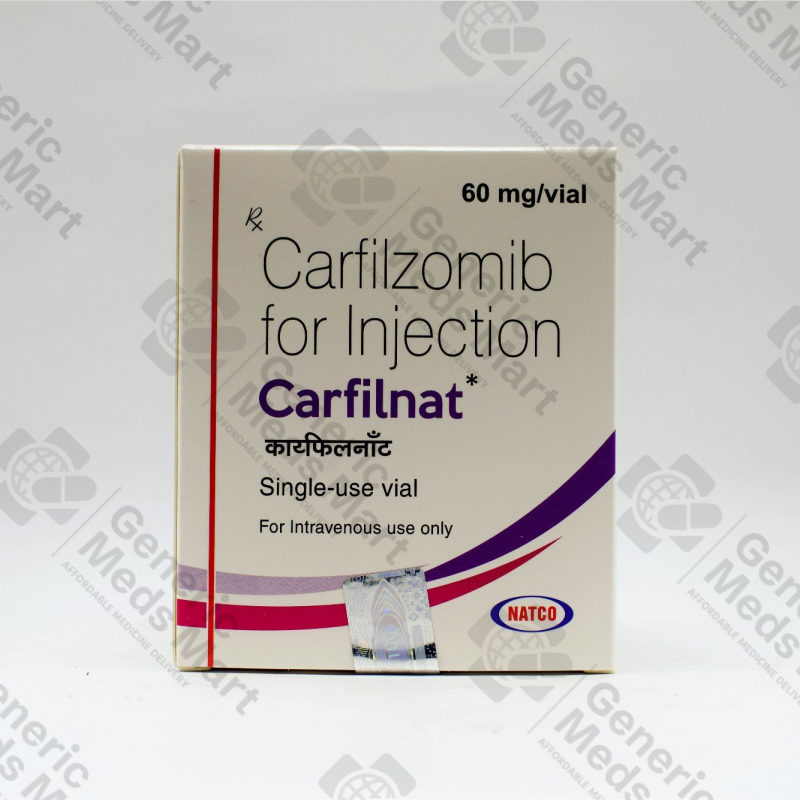
Carfilnat 60 mg Carfilzomib Injection (1 vial)
$315.00
1 vials in pack → $ 315.00 / vial
Carfilnat 60 mg contains carfilzomib (1 vial), a proteasome inhibitor used in specialist-led multiple myeloma regimens as an IV infusion. Generic Meds Mart supplies original packaging with secure checkout and discreet international delivery where regulations allow.
Buy Carfilnat 60 mg Carfilzomib Injection Online
Carfilnat 60 mg Carfilzomib Injection (1 vial)
At a Glance
Generic Name: Carfilzomib
Brand Name: Carfilnat
Strength & Pack Size: 60 mg carfilzomib per vial; 1 vial
Dosage Form & Route: Lyophilised powder for IV infusion after reconstitution and dilution
Therapeutic Class: Proteasome inhibitor (targeted anticancer therapy), injectable chemotherapy
Primary Indication: multiple myeloma in adults where carfilzomib-based therapy is appropriate
Usual Adult Dose: Dose and schedule are individualized and defined by your oncologist; administered in cycles in a clinic or hospital
Prescription Status: Prescription-only medicine (specialist use)
Storage: Store as directed on the vial/carton label; typically refrigerated (2–8 °C), protected from light, and not frozen
Product Description
Carfilnat 60 mg contains carfilzomib, an intravenous proteasome inhibitor used in adult multiple myeloma when your hematology–oncology specialist determines that a carfilzomib-based regimen is appropriate. This product is supplied as a single 60 mg vial of lyophilised powder that must be reconstituted and diluted before IV infusion by trained professionals. Carfilzomib is not a self-administered medicine and should only be used within a confirmed diagnosis, a specialist-led treatment plan, and an agreed schedule of clinic visits and laboratory monitoring.
In multiple myeloma care, treatment choices depend on prior therapies, response history, kidney and heart function, infection risk, and the overall goal of therapy. Carfilzomib may be used in combination regimens with other anticancer agents and supportive medicines, with cycle length and duration defined by local protocols and your specialist’s judgement. Because dosing is individualized and adverse effects can be serious, patients should never start, stop, or alter therapy without clinical supervision.
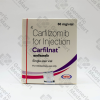
Generic Meds Mart supplies Carfilnat 60 mg carfilzomib injection in original manufacturer packaging sourced through licensed distribution channels. The vial and carton typically display the brand name, strength, active ingredient, batch number, and expiry date to support verification by hospital pharmacies and oncology clinics upon receipt. Orders are processed with secure checkout, shipped in discreet outer packaging, and may be delivered internationally where regulations allow.
Key Uses
Carfilnat 60 mg is used for multiple myeloma in adults when a proteasome inhibitor strategy is clinically appropriate and prescribed by an oncologist. It is commonly selected for patients who require treatment beyond initial therapy or whose disease has returned, but the exact line of therapy depends on individual factors and local guidance.
- multiple myeloma regimens where IV carfilzomib is used with specialist monitoring and supportive care
- Combination approaches where carfilzomib is paired with corticosteroids and/or other anticancer medicines according to protocol
- Situations where an oncology team needs a planned vial supply to match cycle scheduling and pharmacy preparation
How Carfilzomib Works in Chemotherapy
Carfilzomib targets the proteasome, a protein complex that helps cells break down damaged or unneeded proteins. Myeloma cells often rely on high proteasome activity to manage protein stress and maintain survival. By inhibiting proteasome function, carfilzomib increases the build-up of misfolded proteins inside malignant plasma cells, disrupts critical signaling pathways, and can trigger programmed cell death when used consistently within an oncology regimen.
This mechanism is different from classic DNA-damaging cytotoxic drugs and is considered targeted therapy within the broader chemotherapy setting. Even so, carfilzomib affects normal tissues and can cause clinically significant toxicities, so careful monitoring remains essential. Your team may follow blood counts, kidney function, blood pressure, and symptoms of heart or lung complications to balance benefit and safety throughout treatment.
Dosage & Administration
Carfilnat 60 mg is administered by IV infusion in a clinic or hospital by trained healthcare professionals. Your oncologist determines the dose, infusion duration, cycle schedule, and total number of cycles based on your diagnosis, prior treatments, tolerability, and organ function. Patients should not attempt to reconstitute, dilute, or administer carfilzomib themselves, and the medicine must be prepared using appropriate cytotoxic handling procedures.
Hydration plans, premedication, and supportive medicines may be used depending on your protocol and risk profile. Because interactions and comorbidities can influence safety, always provide a complete list of prescription medicines, over-the-counter products, and supplements to your oncology team. If an infusion is missed or delayed, only your treating specialists can decide how to adjust the schedule; do not attempt to compensate by changing future doses on your own.
Precautions
Carfilzomib can affect the heart and blood vessels. Patients with a history of heart failure, coronary disease, arrhythmias, or uncontrolled hypertension may require additional evaluation and monitoring. Report new or worsening shortness of breath, chest pain, swelling of the legs, sudden weight gain, dizziness, or fainting promptly, as these can signal cardiovascular or fluid-balance complications.
Infections and blood count changes may occur during therapy, including neutropenia, anemia, and thrombocytopenia, which can increase the risk of fever, bleeding, bruising, and fatigue. Kidney function can worsen in some patients, and dehydration or tumour lysis risk may require preventive measures depending on disease burden. Tell your team immediately if you develop fever, chills, severe weakness, confusion, reduced urine output, unusual bleeding, or any rapidly worsening symptoms.
Carfilzomib Side Effects
Common side effects
Common carfilzomib side effects can include fatigue, nausea, diarrhea or constipation, decreased appetite, fever, headache, shortness of breath, cough, swelling, and changes in blood counts seen on laboratory tests. Some patients experience infusion-related symptoms such as chills or body aches, and blood pressure changes can occur during treatment.
- Fatigue, weakness, fever, or flu-like symptoms
- Nausea, vomiting, diarrhea, constipation, or reduced appetite
- Anemia, thrombocytopenia, or neutropenia noted on blood tests
- Shortness of breath, cough, or swelling that should still be reported to your team
Serious side effects
Serious side effects require urgent medical attention and can include heart failure, heart attack, severe hypertension, serious arrhythmias, severe shortness of breath, blood clots, severe infections, clinically significant bleeding, tumour lysis syndrome, or severe kidney or liver injury. Rare but severe conditions such as thrombotic microangiopathy and severe pulmonary complications have been reported with proteasome inhibitor therapy.
- Chest pain, severe shortness of breath, fainting, or new irregular heartbeat
- High fever, signs of sepsis, or persistent infection symptoms
- Uncontrolled bleeding, black stools, or severe bruising
- Confusion, sudden weakness, reduced urine output, or severe dehydration symptoms
Storage
Carfilnat 60 mg should be stored as directed on the carton and vial label. In many settings, unopened vials are kept refrigerated at 2–8 °C and protected from light, and they should not be frozen. Preparation, reconstitution, dilution, and disposal are typically handled by a hospital pharmacy or infusion centre according to cytotoxic regulations and local protocols.
Patients are rarely expected to store carfilzomib at home; if transport is required, follow written instructions from your clinic and keep the medicine in its original packaging until it is received by the treatment centre.
Why Buy from Generic Meds Mart
Generic Meds Mart supports access and logistics for oncology medicines such as Carfilnat 60 mg carfilzomib injection. We supply products in original packaging sourced through licensed channels, with batch and expiry details available for verification by pharmacies and clinics. Pricing is displayed in USD to support planning for multi-cycle treatment, and orders are processed through secure checkout.
Shipments are packed in discreet outer cartons, and tracked or international delivery options may be available where regulations allow. Generic Meds Mart does not replace your treating oncologist. Decisions about whether carfilzomib is appropriate, how it is combined with other medicines, and how side effects are managed must be made by qualified healthcare professionals.
Order Now
Before you buy Carfilnat 60 mg online from Generic Meds Mart, you should have a confirmed diagnosis of multiple myeloma and a treatment plan agreed with your oncology team, including the intended regimen, cycle schedule, and monitoring plan. Your clinic can estimate how many vials are needed for planned cycles and help confirm the correct strength and pack size before ordering.
Once your plan is confirmed, select Carfilnat 60 mg (1 vial), add it to your cart, and complete secure checkout in USD. Orders are dispatched in discreet packaging with delivery options where available, but any questions about carfilzomib dosage, missed infusions, or carfilzomib side effects must be directed to your treating team rather than managed independently.
FAQ about Carfilnat (Carfilzomib)
Q1: What is Carfilnat 60 mg used for?
Carfilnat 60 mg contains carfilzomib, a proteasome inhibitor used in adult multiple myeloma when prescribed by an oncologist as part of a specialist-led regimen.
Q2: Is Carfilnat a tablet or an infusion?
Carfilnat is not a tablet. It is a vial that must be reconstituted, diluted, and given by IV infusion by trained professionals in a clinic or hospital setting.
Q3: How often are carfilzomib infusions given?
Carfilzomib is administered in cycles, and the exact infusion days and number of cycles depend on your protocol, combination medicines, and your response and tolerance. Only your oncologist can define the correct schedule.
Q4: What monitoring is usually needed during treatment?
Monitoring often includes blood counts, kidney function tests, blood pressure checks, and clinical assessment for infection, bleeding, and heart or lung symptoms. Your team will set the frequency based on your individual risk profile and regimen.
Q5: What should I do if an infusion is delayed or missed?
Do not try to adjust doses on your own. Contact your oncology team promptly so they can decide how to reschedule the infusion safely within your treatment plan.
Be the first to review “Carfilnat 60 mg Carfilzomib Injection (1 vial)”
Related products



Reviews
There are no reviews yet.