

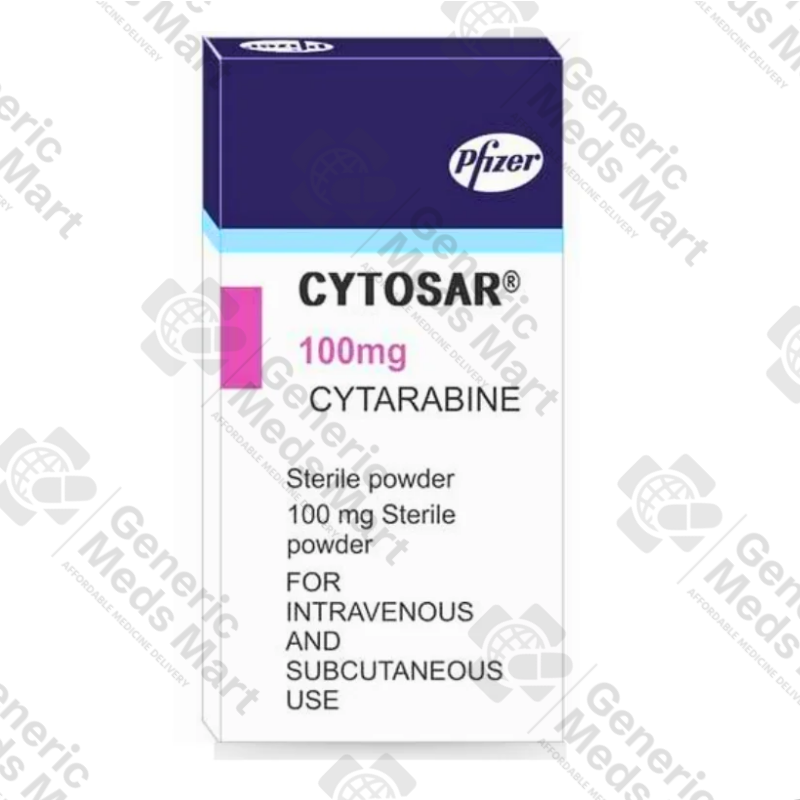
Cytosar Cytarabine – 100 mg Injection (1 pack / 5 ampoules)
$540.00
5 units in pack → $ 108.00 / unit
Cytosar 100 mg cytarabine injection (1 pack / 5 ampoules) is a hospital-only antimetabolite used under specialist haematology–oncology supervision in combination regimens for acute leukaemia and in intrathecal protocols for meningeal involvement. Generic Meds Mart supplies Cytosar in original cytotoxic cartons from licensed manufacturers with discreet, trackable international delivery where regulations allow.
Buy Cytosar 100 mg Cytarabine Injection Online
Cytosar Cytarabine – 100 mg Injection (1 pack / 5 ampoules)
At a Glance
Generic Name: Cytarabine
Brand Name: Cytosar
Strength & Pack Size: 100 mg per ampoule, 1 pack / 5 ampoules
Dosage Form & Route: Solution for IV, subcutaneous or intrathecal use in hospital settings
Therapeutic Class: Antimetabolite antineoplastic (pyrimidine analogue)
Primary Indications: Acute myeloid leukaemia (AML), acute lymphoblastic leukaemia (ALL), blast crisis of chronic myeloid leukaemia and meningeal leukaemia
Typical Use in Therapy: Backbone component of induction, consolidation and maintenance chemotherapy regimens under specialist protocols
Mode of Action: S-phase–active DNA synthesis inhibitor via conversion to cytarabine triphosphate
Key Benefits: Long-established role in acute leukaemia protocols worldwide, including systemic and intrathecal schedules
Precautions: Profound myelosuppression, neurotoxicity, gastrointestinal toxicity and infection risk require close monitoring
Storage: Store in original packaging at the temperature specified in the leaflet; hospital pharmacy manages handling and disposal
Product Description
Cytosar 100 mg contains cytarabine, a pyrimidine analogue antimetabolite that has been a central part of acute leukaemia treatment for many years. This presentation provides five ampoules, each containing 100 mg cytarabine in solution for injection. Cytosar is intended exclusively for use in hospital or specialist clinic settings, where trained haematology–oncology teams prepare and administer it as part of structured chemotherapy protocols.
In clinical practice, cytarabine is used both as systemic therapy and, at appropriate doses and concentrations, as intrathecal prophylaxis or treatment for meningeal leukaemia. It is rarely, if ever, given as a stand-alone single agent; instead, Cytosar cytarabine is integrated into combination regimens with other cytotoxic drugs and supportive medicines designed to induce remission, consolidate response and reduce the risk of relapse. The 100 mg ampoule strength is convenient for flexible dosing calculations based on body surface area and protocol requirements.
Generic Meds Mart supplies Cytosar 100 mg cytarabine injection in original manufacturer cartons with clear cytotoxic labelling, batch numbers and expiry dates. We focus on structured access and logistics, working only with licensed distributors and manufacturers. All clinical decisions about whether cytarabine is appropriate, which doses to use, how to combine it with other medicines and how to manage side effects remain firmly with your treating haematology–oncology team.
Key Uses
Within locally approved indications and up-to-date guidelines, Cytosar 100 mg cytarabine injection is typically used for:
- Induction therapy in acute myeloid leukaemia (AML) when combined with anthracyclines or other agents.
- Consolidation and, in some protocols, maintenance or post-remission therapy for AML.
- Selected regimens in acute lymphoblastic leukaemia (ALL) and in blast crisis of chronic myeloid leukaemia (CML) where cytarabine-containing combinations are appropriate.
- Intrathecal treatment or prophylaxis of meningeal leukaemia as part of central nervous system–directed therapy.
The exact indication, schedule and use of Cytosar are defined by specialist treatment protocols that take into account age, comorbidities, previous therapy, cytogenetic and molecular risk, and local standards of care.
How Cytarabine Works in Chemotherapy
Cytarabine, the active ingredient in Cytosar 100 mg injection, is a cytosine arabinoside–based antimetabolite that interferes with DNA synthesis. After administration, cytarabine is taken up by cells and converted intracellularly to its active metabolite, cytarabine triphosphate (Ara-CTP). Ara-CTP competes with the natural nucleoside deoxycytidine triphosphate for incorporation into DNA, leading to faulty DNA chains and inhibition of DNA polymerase.
Because these actions are most pronounced in the S-phase of the cell cycle, cytarabine preferentially affects rapidly dividing cells, including leukaemic blasts. By inhibiting DNA replication and repair mechanisms in these malignant cells, Cytosar can contribute to their death during intensive chemotherapy regimens. This S-phase specificity and the ability to achieve high concentrations in the central nervous system with certain dosing schedules underpin cytarabine’s role in both systemic and intrathecal leukaemia therapy.
Dosage & Administration
All dosing and administration of Cytosar 100 mg cytarabine injection must be determined by experienced haematologists or oncologists following established protocols and product information. Cytarabine regimens vary widely and may include low-dose, intermediate-dose or high-dose schedules, delivered as intermittent IV boluses, short infusions, continuous infusions or subcutaneous injections. In selected cases and at appropriate concentrations, cytarabine is administered intrathecally as part of CNS-directed leukaemia therapy.
Dose and schedule are typically based on body surface area, disease type, treatment phase, organ function and prior therapies. Intensive cytarabine therapy requires hospital admission, specialist nursing care and access to transfusion support, infection management and close laboratory monitoring. Cytosar must never be self-administered and should not be handled by patients or caregivers at home outside of a clear and approved hospital-directed plan.
Precautions
Cytarabine is associated with profound bone marrow suppression, which can lead to severe neutropenia, thrombocytopenia and anaemia. As a result, patients receiving Cytosar 100 mg injection require frequent full blood counts and, where necessary, red cell and platelet transfusions, growth factor support and infection prophylaxis or treatment. Fever, mucositis, unexplained bruising or bleeding and signs of infection require urgent clinical assessment.
At higher doses, cytarabine can cause specific neurotoxicities, including cerebellar dysfunction with ataxia, dysarthria and nystagmus, particularly in older patients or those with renal impairment. Eye toxicity such as conjunctivitis and keratitis may occur, and prophylactic steroid eye drops are often recommended during high-dose cytarabine therapy according to local protocols. Cytarabine can also contribute to gastrointestinal toxicity (nausea, vomiting, diarrhoea, abdominal pain), hepatic enzyme elevations and, rarely, pulmonary toxicity or myocardial impairment.
Cytarabine is teratogenic and should be avoided in pregnancy unless potential benefit clearly outweighs risk and no safer alternatives exist. Effective contraception is recommended for patients and partners during and after treatment as advised by the specialist team. Breastfeeding is usually not recommended during cytarabine therapy. All concomitant medicines, including other chemotherapy, antibiotics, antifungals and antivirals, should be reviewed for interactions and overlapping toxicities.
Cytarabine Side Effects
Common side effects
Common cytarabine side effects with Cytosar 100 mg injection, particularly at standard doses, include bone marrow suppression with low white blood cells, red cells and platelets, fatigue, fever, mucositis, nausea, vomiting, decreased appetite, mild liver enzyme elevations, hair thinning or loss, injection-site irritation and transient rash. Many patients also experience general malaise and increased susceptibility to infections during nadir periods.
These common cytarabine side effects are typically managed with planned supportive care: antiemetics, mouth care protocols, transfusions, growth factors where appropriate, infection surveillance and prompt antibiotic therapy. Regular monitoring allows clinicians to distinguish manageable toxicity from early warning signs of more serious complications that may require dose adjustment or treatment interruption.
Serious side effects
Serious cytarabine adverse effects require urgent specialist attention. These can include severe or prolonged bone marrow suppression with sepsis or life-threatening infections, significant bleeding, high-grade mucositis, severe diarrhoea, signs of cerebellar toxicity (unsteady gait, slurred speech, difficulty with coordination), seizures, confusion, severe visual disturbance, acute respiratory distress, chest pain or signs of myocardial injury.
If any of these warning signs occur during a Cytosar-containing regimen, patients should seek immediate medical care and inform their treating team that they are receiving cytarabine. The haematology–oncology team may need to stop or modify treatment, arrange urgent investigations, escalate supportive therapy and manage complications in a high-dependency or intensive care setting where necessary.
Storage
Cytosar 100 mg cytarabine injection should be stored in its original carton at the temperature recommended in the product leaflet, protected from light and extremes of heat. In practice, storage and handling are usually managed entirely by hospital or specialist clinic pharmacies, which also ensure correct preparation, dilution and disposal in line with cytotoxic safety regulations. Ampoules should not be used after the expiry date on the pack, and any unused solution or materials in contact with cytarabine must be discarded according to local hazardous waste procedures.
Why Buy from Generic Meds Mart
Generic Meds Mart is dedicated to structured access for essential oncology and haematology medicines such as Cytosar 100 mg cytarabine injection. We work only with licensed manufacturers and authorised distributors, and we supply Cytosar in original cartons with clearly visible batch numbers and expiry dates so that hospital and clinic pharmacies can verify authenticity and traceability.
Pricing is shown in USD to assist hospitals, clinics and patients in budgeting for multi-cycle acute leukaemia treatment plans. We ship using neutral outer packaging with no reference to cancer, chemotherapy or leukaemia on the outside, and we offer trackable shipping options where regulations allow. Our role is limited to supply and logistics; we do not make medical decisions and do not advise on individual cytarabine dosing, regimen selection or suitability.
Order Now
Cytosar 100 mg cytarabine injection is a potent antineoplastic medicine that must only be used within carefully controlled hospital protocols. Before arranging supply through Generic Meds Mart, ensure that a haematology–oncology team has confirmed the diagnosis, defined a cytarabine-containing regimen, reviewed organ function and discussed risks and benefits in detail with the patient or caregivers.
Once a clear plan is in place, the treating centre or authorised purchaser can calculate how many packs of Cytosar 100 mg (1 pack / 5 amps) are needed for induction, consolidation or CNS-directed phases. The required quantities can then be ordered on Generic Meds Mart, added to the cart and checked out securely in USD. Medicines will be shipped in discreet packaging, but all aspects of administration, monitoring, side-effect management and decisions about dose changes or discontinuation must remain with the specialist team, not the patient.
FAQ about Cytosar (Cytarabine)
Q1: What is Cytosar used for?
Cytosar contains cytarabine, an antimetabolite chemotherapy medicine primarily used in combination regimens for acute myeloid leukaemia (AML), certain acute lymphoblastic leukaemia (ALL) protocols, blast crisis of chronic myeloid leukaemia and intrathecal treatment or prophylaxis of meningeal leukaemia, according to local guidelines.
Q2: Is Cytosar given as an injection or infusion?
Cytosar 100 mg cytarabine injection is supplied as a solution in ampoules that can be given as IV bolus, short infusion, continuous infusion, subcutaneous injection or intrathecal dose, depending on the protocol. The exact method is determined by the treating haematology–oncology team and is always carried out in a controlled medical setting.
Q3: Why does Cytosar require so much monitoring?
Cytarabine can cause profound bone marrow suppression, serious infections and organ toxicities, especially at higher doses. Frequent blood tests, neurological checks, eye assessments, infection surveillance and supportive care measures are needed to keep treatment as safe and effective as possible. Monitoring requirements are part of the reason Cytosar is reserved for specialised centres.
Q4: Can Cytosar be taken at home?
Cytosar 100 mg cytarabine injection is not a self-administered medicine and is not intended for routine home use by patients or caregivers. Even when parts of a regimen are delivered in an outpatient setting, preparation and administration are handled by trained professionals with access to emergency support. Any questions about where treatment will take place should be discussed with the treating team.
Q5: Does Cytosar cure leukaemia?
Cytarabine is a key component of many curative-intent protocols for acute leukaemia, but it is rarely the only drug used, and long-term outcomes depend on multiple factors, including leukaemia subtype, risk profile, response to therapy and any subsequent transplantation or maintenance strategies. Only your haematology–oncology team can explain the realistic goals of a Cytosar-containing regimen in your specific situation.
Be the first to review “Cytosar Cytarabine – 100 mg Injection (1 pack / 5 ampoules)”
Related products
Sale!

Original price was: $39.00.$36.00Current price is: $36.00.

Reviews
There are no reviews yet.