

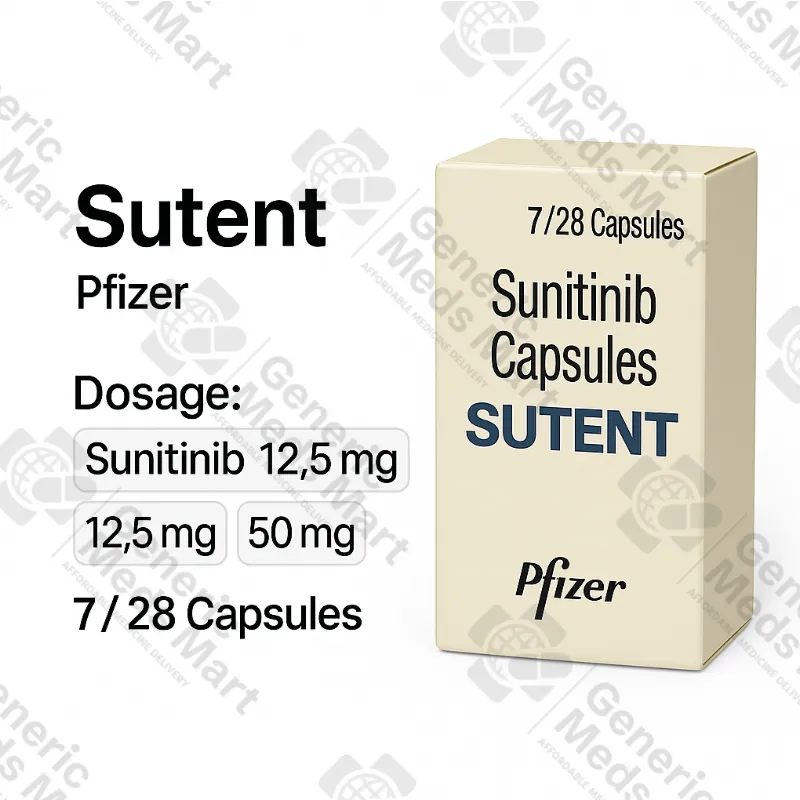
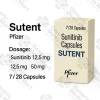
Sutent Sunitinib – 12.5 mg, 25 mg, 50 mg Capsules
Price range: $562.00 through $2,108.00
Sutent sunitinib capsules 12.5 mg, 25 mg (1 pack / 7 caps) and 50 mg (1 pack / 28 caps, EG) are oral multi-targeted tyrosine kinase inhibitor strengths used under specialist oncology supervision for advanced or metastatic renal cell carcinoma, imatinib-resistant or intolerant gastrointestinal stromal tumours and selected pancreatic neuroendocrine tumours. Generic Meds Mart supplies Sutent in original sealed oncology packaging from licensed distributors with discreet, trackable international shipping where regulations allow.
Buy Sutent Sunitinib 12.5 mg, 25 mg and 50 mg Capsules Online
Sutent Sunitinib – 12.5 mg, 25 mg, 50 mg Capsules
At a Glance
Generic Name: Sunitinib (as sunitinib malate)
Brand Name: Sutent
Strength & Pack Size: 12.5 mg and 25 mg (1 pack / 7 capsules); 50 mg (1 pack / 28 capsules, EG)
Dosage Form & Route: Oral hard gelatin capsules for swallowing whole
Therapeutic Class: Multi-targeted tyrosine kinase inhibitor (VEGFR, PDGFR and related pathways)
Primary Indications: Advanced or metastatic renal cell carcinoma (RCC), imatinib-resistant or intolerant gastrointestinal stromal tumours (GIST), selected pancreatic neuroendocrine tumours (pNET)
Typical Use in Therapy: Continuous or cyclic oral targeted therapy under specialist oncology supervision
Mode of Action: Inhibits multiple receptor tyrosine kinases driving tumour angiogenesis and proliferation
Key Benefits: Proven oral option that can delay disease progression and control tumour burden in carefully selected patients
Precautions: Requires close monitoring of blood pressure, liver function, cardiac status, thyroid function and blood counts
Storage: Store in original packaging below 30 °C, protected from moisture and out of children’s reach
Product Description
Sutent is a branded formulation of sunitinib, a multi-targeted tyrosine kinase inhibitor used in the management of advanced or metastatic renal cell carcinoma, imatinib-resistant or intolerant gastrointestinal stromal tumours (GIST) and selected pancreatic neuroendocrine tumours (pNET). As an oral targeted agent, Sutent sunitinib capsules are designed to be taken at home but always under the direction of an experienced oncology team who can integrate sunitinib into a comprehensive treatment plan.
The Sutent range offered here includes 12.5 mg and 25 mg packs containing 1 pack / 7 capsules each, and 50 mg packs containing 1 pack / 28 capsules (EG). This flexibility supports dose titration, stepwise adjustments and long-term maintenance schedules that may be required as disease status and tolerance evolve. Sunitinib is not a general-purpose chemotherapy pill; it is a potent targeted medicine whose benefits and risks must be weighed carefully against other systemic options such as immunotherapy, other tyrosine kinase inhibitors or combination regimens.
Generic Meds Mart supplies Sutent sunitinib capsules in original, sealed oncology packaging from licensed distributors. Cartons clearly show the strength (12.5 mg, 25 mg or 50 mg), pack size and generic name, allowing oncology pharmacists to verify each pack before dispensing. Outer shipping boxes are neutral, with no reference to kidney cancer, GIST or pancreatic tumours on the outside, helping preserve patient confidentiality. Prices are displayed in USD to support planning for courses of Sutent therapy that may extend over many months when treatment is effective and tolerable.
Key Uses
Within the scope of local approvals and guidelines, Sutent sunitinib capsules are used in adults for several key indications. In advanced or metastatic renal cell carcinoma, Sutent is one of the established targeted therapies that can help control disease after surgery or when surgery alone is insufficient. In gastrointestinal stromal tumours (GIST), Sutent may be used in patients who are intolerant of, or whose disease has progressed on, imatinib. In selected pancreatic neuroendocrine tumours, Sutent sunitinib provides another targeted systemic therapy option where evidence and regulatory status support its use.
The choice of Sutent strength and schedule is always individualised. Some patients start on a standard 50 mg daily regimen in 6-week cycles (4 weeks on treatment followed by 2 weeks off), while others follow alternative continuous daily dosing at lower strengths, depending on label, guidelines and tolerability. Oncologists consider disease site, prior therapies, comorbidities and the anticipated toxicity profile when deciding whether to use Sutent and how to structure the regimen.
How Sunitinib Works in Chemotherapy
Sunitinib, the active ingredient in Sutent capsules, is a small-molecule tyrosine kinase inhibitor that targets multiple receptors involved in tumour angiogenesis and cell proliferation. Key targets include vascular endothelial growth factor receptors (VEGFR), platelet-derived growth factor receptors (PDGFR), c-Kit, FLT3, CSF-1R and RET. These receptors play important roles in signalling pathways that drive tumour blood vessel formation and support the growth and survival of cancer cells.
By inhibiting these receptor tyrosine kinases, sunitinib reduces pro-angiogenic signalling, disrupts the formation of new tumour blood vessels and interferes with pathways that allow malignant cells to survive and divide. In renal cell carcinoma, GIST and selected pancreatic neuroendocrine tumours, this can translate into tumour shrinkage or disease stabilisation, delayed progression and longer progression-free survival in appropriately selected patients. Because Sutent affects signalling in both tumour and normal tissues, careful monitoring is needed to detect and manage off-target or on-target toxicities in normal organs.
Dosage & Administration
Sutent sunitinib capsules are prescribed and monitored only by oncologists experienced with targeted therapies. The usual total daily dose is expressed in milligrams and may be constructed using the 12.5 mg, 25 mg or 50 mg strengths to match local product information and trial-proven regimens. Many renal cell carcinoma and GIST patients follow a 50 mg once-daily schedule with 4 weeks on treatment followed by 2 weeks off in 6-week cycles, while other indications may use continuous daily dosing at lower doses where approved.
Capsules should be swallowed whole with water and taken at approximately the same time each day. Sutent can generally be taken with or without food, but patients should follow the exact instructions in the patient leaflet and their oncologist’s advice. Treatment is usually continued as long as the disease remains controlled and side effects are manageable. Dose interruptions, reductions or occasional increases may be required when toxicities arise or when disease response and tolerability allow adjustment. Patients should never change their Sutent dose or schedule without explicit guidance from their oncology team.
Precautions
Before starting Sutent sunitinib capsules, oncologists review the patient’s cardiovascular history, blood pressure, liver function, kidney function, thyroid status, blood counts and concomitant medications. Sunitinib has been associated with hypertension, cardiomyopathy, decreased left ventricular ejection fraction, QT interval prolongation, thromboembolic events and haemorrhage in some patients. Baseline and periodic assessments help detect evolving issues early.
Additional precautions include monitoring for proteinuria, hand–foot skin reactions, mucositis, gastrointestinal symptoms, wound-healing complications and changes in skin or hair pigmentation. Thyroid function may become abnormal during therapy, so regular checks are recommended, with replacement if hypothyroidism develops. Because sunitinib is metabolised via CYP3A4, strong inducers or inhibitors of this enzyme can significantly alter exposure, so all medications and supplements should be reviewed for interactions. Sutent is generally avoided during pregnancy and breastfeeding, and effective contraception is usually advised during treatment and for a period afterwards.
Sunitinib Side Effects
Common side effects
Common sunitinib side effects reported with Sutent include fatigue, decreased appetite, nausea, vomiting, diarrhoea, abdominal discomfort, stomatitis or mouth soreness, changes in taste, mild hair and skin colour changes, hand–foot skin reactions, dry skin or rash, mild bleeding such as nosebleeds, hypertension, low thyroid function, and mild to moderate drops in blood counts. Many patients also experience weight loss and occasional low-grade fevers.
These common sunitinib side effects can often be managed with supportive measures such as antiemetics, antidiarrhoeals, mouthwashes, topical creams, blood pressure medications, thyroid hormone replacement and temporary dose interruptions or reductions when necessary. The oncology team will review symptoms regularly, adjust the Sutent regimen if needed and provide detailed advice on managing daily toxicities while maintaining quality of life.
Serious side effects
Serious sunitinib adverse effects require immediate medical attention. These may include severe hypertension or hypertensive crisis, heart failure or new chest pain, significant bleeding, blood clots, serious infections associated with low blood counts, severe hand–foot reactions that limit daily activities, gastrointestinal perforation, fistula formation, persistent or heavy proteinuria, liver injury with jaundice or marked enzyme elevations, and rare but serious neurological events.
Patients should seek urgent care if they develop sudden shortness of breath, chest pain, rapid weight gain with leg or ankle swelling, severe headache with visual changes, black or bloody stools, coughing or vomiting blood, profound fatigue with dizziness or confusion, severe abdominal pain, yellowing of the skin or eyes, or any other alarming symptom. The oncology team may need to stop Sutent sunitinib capsules, switch therapy, provide intensive supportive care and reassess future treatment options.
Storage
Sutent sunitinib 12.5 mg, 25 mg and 50 mg capsules should be stored in their original blister packs or bottles at the temperature range specified in the product information, usually not above 30 °C and away from moisture. Packs should be kept out of the sight and reach of children and protected from direct heat and light. Capsules should not be transferred to unlabelled containers or weekly pill organisers without clear pharmacy guidance, as this may increase the risk of dosing errors. Expired or unused Sutent should be disposed of in line with local guidance for oncology medicines and should not be thrown into household waste.
Why Buy from Generic Meds Mart
Generic Meds Mart focuses on structured access to targeted therapies such as Sutent sunitinib capsules. By working only with licensed manufacturers and authorised distributors that comply with Good Manufacturing Practice, we help ensure reliable product quality and full batch traceability. Each Sutent pack is supplied in sealed original packaging so oncology pharmacies and clinics can verify strength, batch number and expiry before dispensing.
For patients and centres planning longer-term sunitinib therapy, clear USD pricing and neutral, trackable international shipping can help coordinate supply with clinic visits and monitoring schedules. Our role is limited to access and logistics; we do not provide medical advice or replace your treating oncologists. All decisions about starting, continuing, changing or stopping Sutent remain fully with the specialist team managing your cancer.
Order Now
Sutent sunitinib capsules are potent targeted cancer medicines that must never be used without a personalised treatment plan from an experienced oncology team. Before arranging supply via Generic Meds Mart, ensure that your specialists have confirmed the diagnosis, reviewed other treatment options, chosen Sutent, defined the daily dose and schedule, and explained how monitoring and side-effect management will be organised.
Once the treatment plan is agreed, your clinic or designated purchaser can calculate how many packs of Sutent 12.5 mg, Sutent 25 mg and Sutent 50 mg are needed for the first treatment cycles, taking into account whether the regimen uses cyclic 50 mg dosing or continuous lower-dose schedules. The required strengths and pack counts can then be selected on Generic Meds Mart, added to the cart and ordered through secure checkout in USD. Medicines are shipped in discreet outer packaging with original labelling inside. Patients should never alter Sutent dosing or restart therapy after a break without direct approval from their oncology team.
FAQ about Sutent (Sunitinib)
Q1: What cancers is Sutent sunitinib used for?
Sutent contains sunitinib, a multi-targeted tyrosine kinase inhibitor used in adults for advanced or metastatic renal cell carcinoma, imatinib-resistant or intolerant gastrointestinal stromal tumours (GIST) and selected pancreatic neuroendocrine tumours (pNET), according to local approvals and guidelines.
Q2: Is Sutent chemotherapy or targeted therapy?
Sutent sunitinib capsules are considered targeted therapy rather than traditional cytotoxic chemotherapy. They block specific receptor tyrosine kinases involved in angiogenesis and tumour growth. Even so, Sutent is a powerful anti-cancer medicine with significant side effects and monitoring requirements.
Q3: How long will I need to take Sutent?
Many patients stay on Sutent sunitinib capsules as long as their disease remains controlled and side effects are manageable. Treatment duration varies widely and may span months or years. Your oncology team will review scans, blood tests and symptoms at regular intervals to decide whether to continue, adjust or switch therapy.
Q4: Can I take other medicines with Sutent?
Sunitinib is metabolised by CYP3A4 and can interact with various prescription drugs, over-the-counter medicines and herbal supplements. Always give your oncology team and pharmacist a full list of all products you use. Do not start or stop any medicine, including heartburn remedies or herbal products, without checking for interactions with Sutent.
Q5: What monitoring will I need while on Sutent?
Patients on Sutent sunitinib capsules typically need regular blood pressure checks, full blood counts, liver and kidney function tests, thyroid function tests, and sometimes cardiac assessments such as echocardiograms or ECGs. These checks help detect emerging problems early so that doses can be adjusted and complications managed promptly.
1 review for Sutent Sunitinib – 12.5 mg, 25 mg, 50 mg Capsules
Add a review
Related products
Sale!
Original price was: $146.00.$115.00Current price is: $115.00.

John –
First time bought generics. My doctor advised me to look for those kinds of drugs. I was very surprised to see how much less it costs in comparison to the store. I guess there’s no difference, same main substance. Giving 4/5 for a little confusion at the beginning of a payment.